
Android users have reported the MMI code error when they try to send a text or make a call. An error message “Connection problem or invalid MMI code” is displayed on the screen followed by the error code 0. Learn all about MMI code and how to fix the MMI code error on Android.
An “Invalid MMI code” error usually means your phone, SIM, or mobile network could not process a service code correctly, and the fastest fixes are usually simple network or dialer troubleshooting steps.
Carrier and Android support sources consistently point to issues like SIM authentication, unsupported codes, temporary network glitches, or dialer formatting problems.
What is MMI Code?
Every code that is entered or dialed on the phone that contains the character ‘*‘ or ‘#‘ is called MMI code. Several sets of MMI codes are assigned to fetch certain data by sending a request to the network.
The MMI stands for Man-Machine-Interface. Also, the range and pattern of MMI code may vary for mobile phone manufacture.
For example *21*123456789# <SEND> will instruct your phone to forward all incoming calls to 123456789 mobile/landline number.
These MMI codes are hardcoded into every GSM/UMTS/LTE device worldwide and cannot be changed by your network operator.
Here is the list of MMI codes you may use to perform different tasks on your Android smartphone.
What is MMI code Error?
An MMI code error is displayed when your device is either not able to recognize the MMI code entered or the device is not able to process the given code due to a network error.
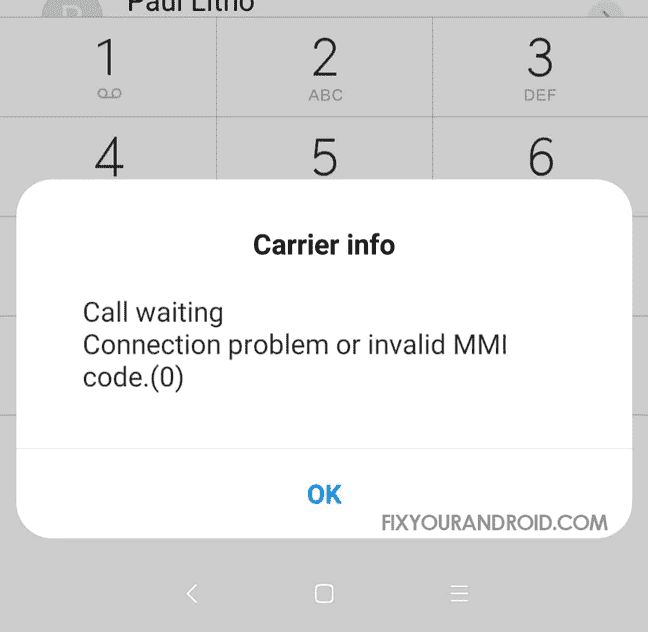
This will simply show a pop-up message “Connection problem or invalid MMI code“. It is quite normal to get the error when your device has poor reception or the device is not registered on the network.
There might be some problems if you are continuously getting the same MMI code error while making a call or sending a message.
Read Also:
What Does “Invalid MMI code” Mean?
Invalid MMI code is an error message that appears when your phone cannot execute a Man-Machine Interface code, often used for balance checks, call forwarding, and other network services. In practical terms, the code you dialed was not accepted by the network, the phone app, or the SIM profile handling the requests.
MMI codes are closely related to USSD-style service codes, so the problem is often less about the number you typed and more about how the phone and carrier are communicating at that moment. That is why the same code may work later, work on another device, or fail only on one SIM profile.
Why Does This Error Happen?
There are a few common reasons the error appears. The most frequent causes are temporary network issues, a SIM card that is not authenticating correctly, a dual-SIM routing conflict, a code that your carrier does not support, or a dialer formatting issue.
The error can also show up after a software update, when the dialer cache becomes corrupted, or when carrier-related services are out of sync with the phone. On Android devices, the dialer, SIM manager, and carrier services work together, so a small glitch in one part can stop the code from processing.
How to Fix MMI Code Error?
The fastest way to fix an invalid MMI code is to refresh the mobile connection, retry the code with the comma trick, and restart the phone if needed. Those three steps solve a large share of cases reported in Android troubleshooting guides and carrier discussions.
- Toggle Airplane Mode on for 10 seconds and then off again.
- Add a comma at the end of the code, then try again.
- Restart the phone and retry the same code.
Airplane Mode forces a fresh network handshake, which can clear a temporary connection issue. The comma trick adds a short pause that can help the device process the code more reliably, especially when the dialer is timing out.
The MMI code error usually goes away once you have proper network reception. But, if you have been getting the error for a while, then here are some methods you can use to fix the MMI code error on your Android phone.
How Do You Fix Invalid MMI Code Fast?
Start with the phone’s network connection, then move to SIM and dialer settings if the first attempt does not work. This order is better than jumping straight to a full reset because most cases are temporary or routing-related.
Method 1: Restart Your Android
Restarting the device forces the SIM card to re-register on the network using com.android.server.telecom for proper reception. This is the first approach to fixing the MMI code error on Android.
In spite, the MMI code has nothing to do with the network as it’s completely dependent on the manufacturer and the model you are using. Still, giving a restart can help you to fix the issue.
Still, some of the users have shared that restarting the device several times may also fix the error.
Method 2: Activate Radio and Turn on IMS over SMS
- Go to Dial pad on the default Android dialer
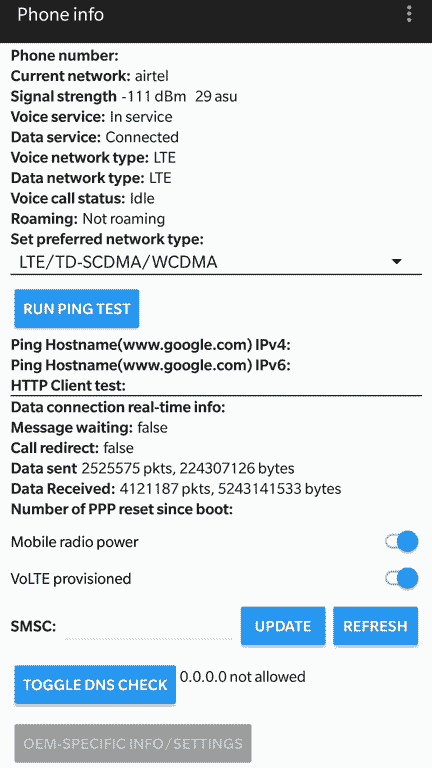
- Type *#*#4636#*#* to open service mode
- Tap on “Device information” or “Phone information”
- Select Run Ping test
- Tap on the Turn Radio Off button and wait for Galaxy to restart
- Select reboot
Method 3: Check Network Settings
- Go to “Settings”
- Then select “Network Connection”
- Tap on “Mobile Networks”
- Then, “Network Operators” and select carrier provider from the list
Method 4: Enter Safe Mode
Safe mode in Android can help you to track the problem-causing factors which make your Android run elusively. Safe mode is helpful when you need to troubleshoot and software-related issues on your Android.
- Turn on the Android Mobile.
- Press and hold the power key until you see the option to restart or Shutdown on the mobile screen.
- Now release the power button and Tap-hold on Shutdown (don’t release your finger from the screen)
- You will get a safe mode logo on the screen with the message “Tap again to restart your phone in safe mode. Downloaded apps will be temporarily disabled to help you troubleshoot your phone“.
- Tap on this Safe mode logo to reboot Android mobile in safe mode.
- A logo at the bottom will confirm that the mobile is in Safe mode.
- Now dial any prefix (eg.*135#) and see if works.
- If you are still getting the “Connection problem or invalid MMI code” pop-up, uninstall any recent app you have installed.
Method 5: Modify Prefix Code
Sometimes adding suffixes like comma(,) to the MMI code may also fix the MMI code error on Android. So, try dialing ‘,*#*#4636#*#*’ instead of ‘*#*#4636#*#*‘ and see if you are still getting the error.
If the code is something like *123#, try entering it with a comma at the end, such as *123#,. Several Android troubleshooting guides describe this as a simple workaround when the phone seems to reject an otherwise valid code.
This method is especially useful when the code works on one device but not on another. It does not fix an unsupported carrier code, but it can help when the problem is timing or parsing rather than network support.
What is IoT Hidden Menu on Android? Know all About it.
What If The Quick Fixes Do Not Work?
If the error still appears, the next step is to check whether the issue is tied to a second SIM, a cached dialer problem, or a carrier-specific service limitation. The goal is to isolate the failing layer one step at a time.
6. Disable the second SIM
On dual-SIM phones, the request may be sent from the wrong SIM profile or through the wrong default line. Temporarily disable the secondary SIM and try the code again.
This is one of the most common hidden causes because the phone can look connected, but the service code is being routed through a line that does not support it. That is why users often see the error on one SIM but not the other.
7. Check whether the code is carrier-specific
Some MMI codes are only supported by certain carriers or service plans. If the network does not support that code, the phone can return an invalid response even when you typed the code correctly.
For example, call waiting, forwarding, balance checks, or forwarding cancellation can behave differently across carriers. If one code fails repeatedly while others work, the problem may be service-specific rather than device-specific.
8. Clear the Phone app cache
Go to your app settings, open the Phone app, and clear its cache. Android how-to guides frequently list this as a useful fix because the dialer app stores temporary data that can become corrupted.
This step is safe because clearing cache does not delete your contacts or messages. It only removes temporary files that may be interfering with code processing.
9. Update Carrier Services
If your phone uses Google’s carrier components, update Carrier Services from the Play Store. A stale carrier service package can interfere with network-based features and USSD/MMI handling.
This matters most after system updates, SIM swaps, or carrier changes. If your phone recently changed software or SIM profiles, updating carrier-related components should be near the top of your checklist.
10. Reset network settings
If the error remains, reset network settings from the system menu. This removes saved Wi‑Fi, mobile, and Bluetooth configurations and can correct deeper network misconfigurations.
Use this step when the phone has recently changed carriers, changed SIMs, or begun failing all service codes at once. It is more invasive than the first fixes, but still much less drastic than a full factory reset.
11. Reinsert the SIM card
Power off the phone, remove the SIM tray, inspect the SIM, and reinsert it carefully. A poor SIM seat or dirty contact can trigger service code failures because the network identity is not being read correctly.
If the SIM looks worn, scratched, or cracked, contact the carrier for a replacement. A damaged SIM can cause repeated invalid-code errors even when the phone is otherwise fine.
Conclusion:
MMI code or Man-Machine-Interface is used to access the special menu or settings on the device. They are typically prefixed and suffixed with a set of * and # and do not requires to dial. Android users have a reporter to get the “Connection problem or invalid MMI code” error message while trying to access a special service menu using MMI codes. Don’t forget to check our TROUBLESHOOT section for other useful error fix guides for Android.
READ ALSO: