What is OEM Unlocking in Android? How to enable it?

OEM unlocking is a process to root the Android device to use it at its full potential. But, What is OEM Unlocking on Android exactly? How does it work? How to Unlock OEM on Android? And what are the advantage and disadvantages of unlocking OEM on Android? Let’s find the answers.

What is OEM Unlocking in Android
Android OEM Unlock

OEM Unlocking allows you to use your Android at its full potential. It typically involves unlocking the bootloader, installing custom recovery, installing custom ROM, rooting and customizing your Android phone as well.

But, before we head to start the process of unlocking the OEM on an Android phone let’s know a bit more about OEM unlocking, its advantages, and disadvantages.
What is OEM Unlock?

Android smartphones are full of features and functionality. But in order to keep users from messing up with the default apps and settings, the Android manufacturer keeps some settings hidden from the User.

OEM unlock lets the user unlock all the settings and functions on an Android phone in order to use it at its full potential. OEM unlock lets you customize and access all the features currently unavailable to users.
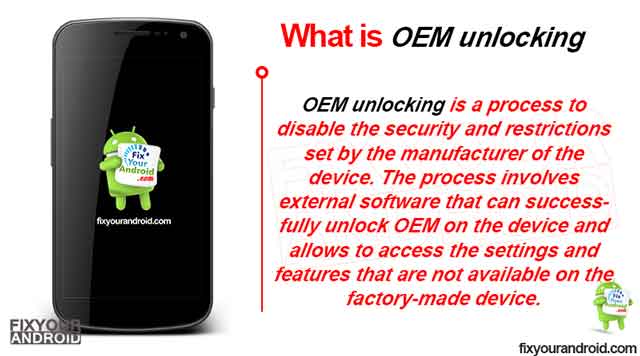
OEM unlocking in Android extends the usability of the device beyond its initial limitations. It’s important to note, though, that unlocking the OEM on Android will void the warranty.

What is OEM Unlocking

The OEM unlock feature empowers users to unlock all settings and functions on their Android phones, unleashing the device’s full potential. Enabling OEM unlock grants access to customization options and currently restricted features.

In a nutshell, unlocking the OEM on Android allows you to use the Android phone beyond its limitations. But remember, unlocking the OEM on Android will void the warranty.

Enabling OEM Unlock can be beneficial for those who want to install custom ROMs, gain root access, or perform other advanced customization on their smartphones.

However, it is important to note that enabling OEM Unlock will void your device’s warranty and may introduce certain risks.

Read Also: What is Android Engineering Mode?

Why do They Lock OEM on Android?

Manufacturers lock the OEM on Android devices for various reasons. Firstly, it ensures that users do not accidentally modify or delete critical system files required for the device to function properly. By locking the OEM, manufacturers can maintain a level of control over how their devices are used.

Locking the OEM also helps prevent unauthorized modifications that could potentially compromise the security of the device. Manufacturers want to ensure that users do not install malicious software or make changes that could lead to vulnerabilities.

Furthermore, locking the OEM allows manufacturers to maintain consistency across their devices, ensuring a standard user experience for all users. It also helps manufacturers control the distribution of software updates and ensure that only authorized and tested updates are installed on their devices.

While OEM locking may seem restrictive to some users, it serves a purpose in maintaining the stability, security, and reliability of Android devices. Manufacturers aim to strike a balance between user customization and device integrity, providing users with a safe and reliable experience.

Before deciding to unlock the OEM on your Android device, it’s crucial to understand the potential risks involved.

As mentioned earlier, enabling OEM unlock will void your warranty, meaning that any issues or damages caused by custom modifications will not be covered by the manufacturer.

This can be a significant concern for users who rely on their warranty for device repairs or replacements.

In addition to warranty concerns, unlocking the OEM carries certain risks that users should be aware of. One of the main risks is the potential for bricking your device.

If you make any mistakes during the unlocking process or install incompatible software, it could render your device inoperable.

Another risk is the increased vulnerability to security threats. Unlocking the OEM allows for the installation of custom ROMs and mods, which may not have undergone the same level of security testing as official software releases.

This increased vulnerability can expose your device to potential malware or other security risks.

Advantages of OEM Unlock on Android

As we are pretty sure about the OEM unlocking. But what are the actual advantages of unlocking the OEM on Android?

What are the features and settings you can assess after unlocking the OEM on your Android phone?  So, here are some advantages of unlocking the OEM on Android.

Advantages of OEM Unlock on Android

Enabling OEM unlock on Android devices comes with several notable benefits, which can enhance your overall user experience and expand the capabilities of your device. Here are the primary advantages:

The main advantage of Enabling OEM unlock on Android are as follows:

1. Unlocking Bootloader

By enabling OEM unlock, you gain the ability to unlock your device’s bootloader. This is essential for advanced customization and installing custom software.

2. Installing Custom Recovery

OEM unlock allows you to replace the stock recovery with a custom recovery, such as TWRP recovery mode. Custom recoveries offer more advanced options for backup, restore, and flashing custom ROMs.

3. Installing Custom ROMs

With an unlocked OEM, you can easily install custom ROMs, which are alternative operating systems for your Android device. Custom ROMs often provide improved performance, unique features, and the latest Android updates for older devices.

4. Rooting Device

Enabling OEM unlock is a prerequisite for rooting your device. Rooting provides administrative access, allowing you to remove restrictions, customize your device deeply, and run apps that require root access.

5. Installing a custom kernel

Custom kernels can enhance your device’s performance and battery life. OEM unlock enables you to install custom kernels tailored to your specific needs.

6. Removing bloatware

Bloatware or pre-installed apps that cannot be uninstalled can be removed or disabled after OEM unlock. This frees up storage space and can improve device performance.

7. Installing Mods to customize the default buttons for actions

OEM unlock permits the installation of mods that can customize default buttons for various actions, enabling you to tailor your device’s functionality to your preferences.

8. Accessing and Modifying System Files and Partitions

You gain the ability to access and modify system files and partitions, providing advanced users with greater control over the inner workings of their Android devices.

Read Also: Install OTA Updates Manually on Android | Sideload OTA

Disadvantages of OEM Unlocking on Android

Disadvantages of OEM Unlocking on Android

Besides these advantages, there are certain disadvantages of unlocking OEM on Android. The one major disadvantage is that unlocking will immediately void the warranty once you attempt it. And some other disadvantages of Android OEM unlock are as follows:

No More Software Updates:

After unlocking OEM, your Android device may no longer receive official software updates from the manufacturer. This can leave your device running on older software versions, potentially missing out on new features, security patches, and performance enhancements.

Increased Vulnerability:

Unlocking OEM can make your Android device more vulnerable to hackers, attackers, and spyware. Without the manufacturer’s security safeguards, your device may become more susceptible to security threats.

Risk of Bricking:

Improperly unlocking the bootloader can lead to a situation where your Android device becomes unusable, commonly referred to as “bricking.” This is a significant risk if the unlocking process is not followed correctly.

Potential for System File Issues:

If you’re not familiar with the process or mishandle custom ROM installations, you may inadvertently disable or remove important system files, making your device unstable or non-functional. OEM unlocking can expose these critical files to potential harm.

There are countless other disadvantages you can encounter if you are familiar with the process and handling a custom ROM on an Android. As you might end up disabling/removing the important system files as OEM unlocking makes them vulnerable.

Why would you need to enable OEM Unlocking?

There are a few key reasons why someone may want to enable OEM unlocking on their Android device:

For one, unlocking the bootloader allows you to install custom firmware, kernels, and operating systems. With an unlocked bootloader, you are no longer limited to the software provided by the device manufacturer.

You can install custom ROMs like LineageOS to get new features, customization options, and potentially better performance or battery life.

For Android enthusiasts and power users, the ability to flash custom ROMs is a major benefit.

Additionally, an unlocked bootloader is required to gain full root access on a device. Root access allows modifying system-level files and settings for advanced customizations.

With root, you can install mods, run specialized apps, automate tasks, customize the UI, and more. Many apps and capabilities require a rooted device.

Developers may also need an unlocked bootloader for debugging and development purposes. It gives access to the system partition for testing apps and modifications.

The ability to flash unsigned code and make changes is critical for development work.

There are some risks, like potential for bricking the device, voiding the warranty, and decreased security.

But for many Android users, the benefits of an unlocked bootloader outweigh the risks. It opens up a whole new level of customization and control over your device’s software.

How to Enable OEM Unlocking on Android?

How to Enable OEM Unlocking on Android?

The OEM unlocking enables your device to install the Android bootloader and custom ROMs on the device to use at full potential. Follow the Steps to enable OEM unlocking.

Step 1:Enable Developer options

  1. Go to Settings on Android
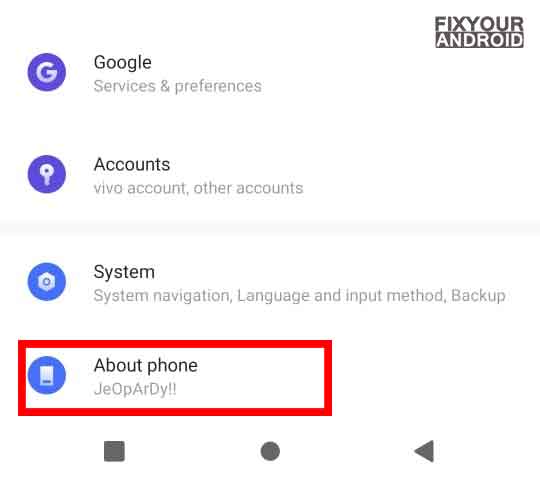
  2. Open About phone.
    android about
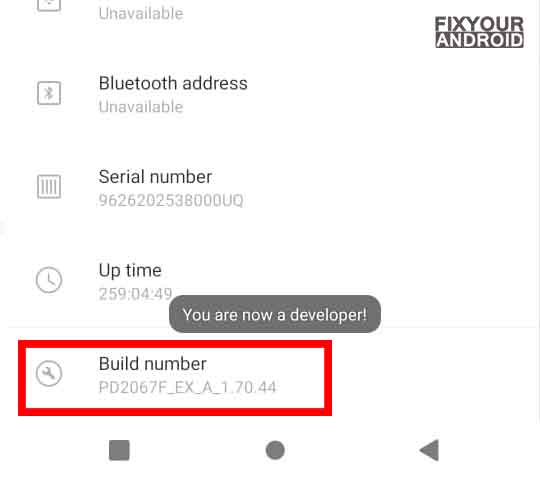
  3. Click on Build Number 7 times. A pop-up “You are now a developer” will confirm the enabling of developer option
    tap 7 times on build number

Step 2:Enable OEM unlock From developer option

  1. Go to Settings.
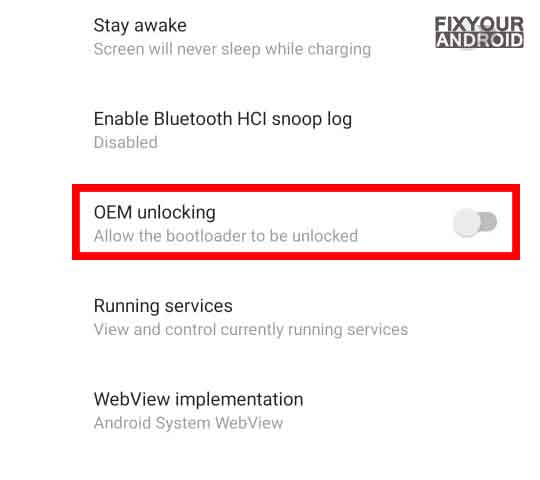
  2. Find and tap on the Developer options.
  3. Tap on OEM unlocking.
     OEM unlocking under developer options
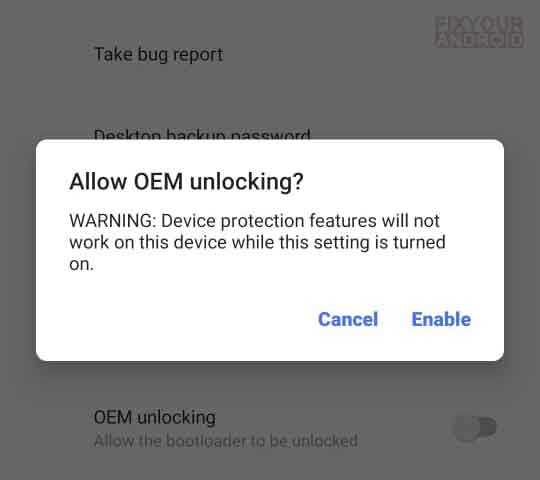
  4. Tap on Enable on the Allow OEM Unlocking Warning screen.
    Allow OEM Unlocking Warning screen

This will enable the OEM unlocking on your android. Now, you can use the ADB to root, install custom ROMs or tweak settings on your device.

Note: Different phones have different menus in Settings. Just remember to look for the build number options somewhere in your device and click on it 7 times.

The same goes for the developer options too; you may find developer options in Settings, but in Android 14 and later versions, it’s under Settings > System.

How to Enable OEM Unlock on Your Samsung Device?

If you own a Samsung device running Android 5.0 Lollipop or a later version, you might have noticed that the OEM unlock option is missing from the developer options.

Samsung has removed this option as a means to access the bootloader on their devices. However, there’s still a way to enable OEM unlock if you wish to do so.

Here’s how you can achieve this:

  1. Obtain a tool called Odin. Odin is a software program designed for flashing firmware and other files onto your Samsung device. You can find the latest version of Odin available for download on various websites.
  2. Once you’ve downloaded and installed Odin, launch the program on your computer and connect your Samsung device to it using a USB cable.
  3. After your device is connected, locate and click on either the “PDA” or “AP” button within the Odin interface.
  4. Choose the file named “CODE_SAMSUNG-RECOVERY.tar.” This specific file is what enables the OEM unlocking feature on your device.
  5. Now, click on the “Start” button in Odin and wait for the process to complete. Your device will undergo a reboot as part of this process.
  6. Once the process is finished, your device will restart, and you will now have the ability to unlock the bootloader using the standard method, which involves using the command “fastboot oem unlock.”

Enabling OEM unlock allows users to unlock the bootloader of their device, giving them more control over their Android system. However, this process can have consequences such as tripping Knox, Samsung’s security feature.

Once you enable OEM unlock and install a custom ROM on your Samsung device, the Knox security feature will be disabled, which may leave your device vulnerable to security threats.

It’s important to note that unlocking the bootloader can also void the warranty and disable certain features like Samsung Pay.

Why Is OEM Unlock Missing on My Android?

There are a few common reasons why the OEM unlock option may be missing from your Android device settings:

  • The device manufacturer has chosen to permanently disable the OEM unlock option. Some OEMs like Xiaomi and Motorola completely remove the unlock ability on many models to increase security.
  • The carrier has requested the removal of OEM unlock for devices sold specifically by that carrier. Carriers sometimes enforce this to prevent customers from tinkering with devices on their network.
  • The device is a carrier-branded model. Carrier versions often come with restrictions including the inability to unlock the bootloader. Only unlocked models directly from the OEM will have OEM unlock.
  • The device does not meet certain requirements imposed by the OEM. For example, Samsung OEM only allows unlocking after a waiting period from device purchase date, and only on certain hardware variants.
  • The device has been refurbished or relocked by the OEM/carrier after being returned. Refurbished units often have OEM unlock disabled.
  • The device’s bootloader is already unlocked, so the unlock option disappears. An unlocked bootloader cannot be re-locked on most devices.
  • The device is running older Android firmware that did not include an OEM unlock toggle in settings. The feature was added in later versions.

How to Fix No OEM Unlock in Developer Options?

No matter why you’re facing the issue of “OEM Unlock missing,” there are various methods you can attempt to recover this option. It’s important to note that certain phone models, such as Snapdragon-powered phones in North America, may have restrictions on unlocking the bootloader.

However, you can still give it a try, as Samsung’s policies may change in the future, potentially allowing more users to unlock the bootloader.

Method 1: Fix OEM Unlock Missing by Changing the Date

If the OEM unlock option is missing from your device’s developer options, you can try this method, especially if your device is new. Follow these steps:

  1. Open the Settings on your Galaxy phone.
  2. Navigate to “General Management” > “Date and Time.”
  3. In the Date and Time section, turn off “Automatic date and time.”
  4. Set the date manually to a date from the last month or earlier.
  5. Return to the main Settings menu and then go to “About Phone” > “Software Information.”
  6. Tap the “Build number” option seven times to enable developer options.
  7. Now open the developer options on your phone.
  8. Look for the “Auto Update System” option and disable it.
  9. Next, go to “Settings” > “Software Update” and disable the “Auto download over Wi-Fi” option. You can now check for updates manually, and you can ignore any error messages if they appear.
  10. Once done, reboot your device.
  11. Go back to the developer options, and you should now find the “OEM Unlocking” option.

This method provides an easy way to address the issue of the missing OEM unlock option in developer options. If it doesn’t work for you, we can explore other methods.

Method 2: Fix No OEM Unlock by removing the SIM

If the first method didn’t work, you can modify it slightly and try again. Here’s what you can do:

  1. Remove the SIM card from your phone and prepare for a phone reset, as enabling OEM unlocking will reset your device anyway.
  2. Reboot your phone and connect it to Wi-Fi to start the setup process.
  3. During the setup, skip the login for both your Gmail and Samsung accounts. If this step doesn’t work initially, try logging into both accounts and then proceed.
  4. Follow all the steps outlined in method 1.
  5. Check the Developer Options, and you should now find the “OEM Unlocking” option available.

This adjusted approach may help you successfully enable OEM unlocking if the initial method did not work.

Method 3: Fix the OEM Unlock Missing by flashing the Firmware

Occasionally, resolving the issue of “OEM Unlock missing” from the developer options involves flashing the firmware, either the same version or from a different region.

However, it’s important to note that mistakes in the flashing process can lead to a bootloop, so it’s crucial to be prepared to recover from this situation.

Here’s how you can attempt this method:

  1. Download the firmware you want to flash, preferably from the same region as your device. You can use tools like Frija or Samsung Firmware Downloader for this purpose.
  2. Obtain the Odin Tool, which is used to flash the firmware. Ensure that you select CSC (Consumer Software Customization) and not the CSC Home option. Detailed steps for this process can be found here.

Taking these steps with caution can help you address the issue of “OEM Unlock missing” in the developer options by flashing the firmware.

However, please be aware of the potential risks and ensure you are familiar with the recovery process for a bootloop situation.

Enabling OEM Unlock vs Unlocking Bootloader

OEM unlock and bootloader are often considered interchangeably. But, these two are quite different. The OEM unlocking is a process that enables your device to accept the installation of a custom bootloader or ROMs on Android. So, What is a Bootloader than?

  • Enabling OEM unlock simply allows you to unlock the bootloader – it does not unlock it directly. You still have to issue the fastboot oem unlock command to unlock the bootloader.
  • The OEM unlock toggle is found in the Developer options section of your device settings. Toggling it on just enables the ability to unlock the bootloader.
  • Unlocking the bootloader requires connecting the powered off device to a computer and issuing fastboot commands. The actual unlock command erases user data.
  • After enabling OEM unlock, rebooting the device does not wipe data. The bootloader remains locked. Data is only erased when you send the unique unlock command.
  • OEM unlock can be re-disabled later without affecting the bootloader lock state. But unlocking the bootloader cannot be reversed on most devices.
  • Unlocking the bootloader will show a warning screen on future device boots that the bootloader is unlocked. OEM unlock alone does not trigger this.

What is a Bootloader on Android?

A bootloader is a piece of software information accountable to initiate the device booting process and establish a connection between the hardware and the software of the device.

When you boot(switch on) your device, the bootloader comes in the action and loads the opening system from storage to memory to that make it capable to access the hardware and components like I/O and storage.

In a nutshell, the bootloader is a piece of kernel software that helps the device to establish a connection between the software and hardware of the device while booting.

How to Disable OEM Unlock on Android

How to Disable OEM Unlock on Android

In case you want to disable OEM Unlock, then follow the similar steps as the above to do so,

  1. Open the Settings app from the App Drawer or from the Notification/Control centre.
  2. Then, navigate to the System Settings.
  3. Now, scroll down to Developer Options.
  4. Finally, go to the OEM Unlock option and toggle the switch towards the left to disable it.

Android OEM Unlock: FAQs

Does Enabling OEM unlock voids warranty of device?

No, OEM Unlocking doesn’t void the warranty of your Android device. But, installing a custom ROM or unlocking the Bootloader may void the warranty.

Can I root Android without unlocking bootloader?

Yes, you can always root your android without unlocking bootloader. As rooting and bootloader unlocking is completely different. However, the easiest way to root a device is by unlocking the bootloader.

My OEM Unlock Options is turned grey?

As Most Galaxy smartphones sold in the USA and Canada with a Snapdragon chipset come with non-unlockable bootloaders. This may cause you to see the greyed OEM unlocking ot no OEM unlocking option at all.

Is OEM unlocking safe?

The moment you enable the OEM unlocking on your device, all the security feature including KNOX(on Samsung) is disabled and this makes your device vulnerable.

Why did my OEM Unlock options turn grey?

Many Galaxy smartphones sold in the USA and Canada have Snapdragon chipsets, and these often come with bootloaders that cannot be unlocked. As a result, you may notice that the OEM unlocking option is either greyed out or not available at all.

Final Words

OEM or Original equipment manufacturer on Android devices signifies the software version, built and patches provided by the manufacturer to the device. The OEM has its own limitations and restrictions for users in terms of tweaking settings, removing and installing apps and the version of Android OS and many more. OEM Unlocking allows you to use your Android at its full potential. It typically involves unlocking the bootloader, installing custom recovery, installing custom ROM, rooting and customizing your Android phone

as well.